
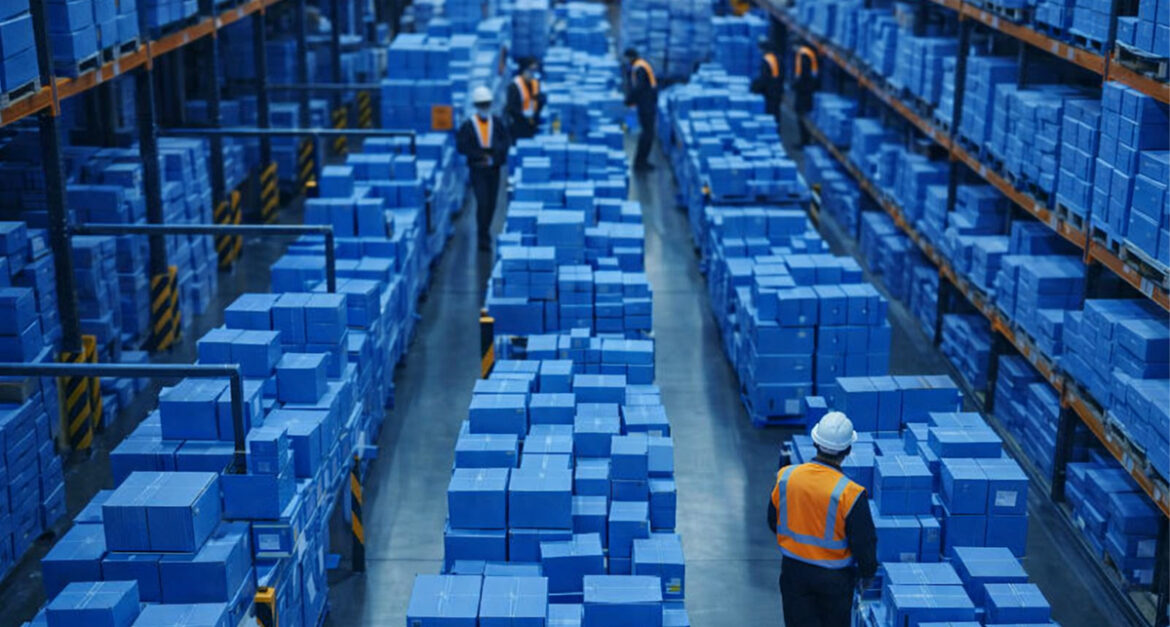
From Design to Delivery: The Power of 360° Packaging
Why Packaging Is Not “Just a Box”—It’s a Supply Chain Strategy Most businesses see packaging as a functional purchase. A box, a crate, a protective layer. Something that simply carries the product from one point to another. But in reality, packaging influences far more than product safety. It affects:
- transport cost
- warehouse efficiency
- handling speed
- space utilisation
- damage ratios
- customer experience
This is why the most efficient supply chains don’t just buy packaging — they engineer it.
And that is the core idea behind 360° Packaging: a design-to-delivery approach that treats packaging as a strategic lever for performance, cost, and operational flow.
1. What 360° Packaging Really Means
360° packaging is not about choosing stronger materials. It is a complete lifecycle approach that begins with design and ends with seamless delivery.
It includes:
-
- Understanding the product
- Engineering the right design
- Selecting the right materials
- Testing for real-world handling
- Optimising space and volume
- Integrating warehouse and transport requirements
- Ensuring compatibility with returnable systems
In simple terms:
Packaging becomes a designed solution, not a generic container.
2. Why Traditional Packaging Creates Hidden Losses
Many supply chains unknowingly absorb cost because packaging decisions are made without engineering insight.
Common issues include:
Repeating old packaging without re-evaluation
Even when product dimensions, handling methods, or route conditions have changed.
Oversized packaging
More empty space means fewer units per pallet, truck, or container.
Insufficient strength
Weak packaging leads to dents, breakage, and inconsistent delivery quality.
Poor alignment with warehouse flow
If packaging doesn’t match pallet footprints, FLC sizes, or racking dimensions, space is wasted at every stage.
Lack of real testing
Packaging is often approved visually, not operationally.
These gaps lead to higher logistics cost, slower handling, and unnecessary waste — all of which impact profitability.
3. The Advantages of a Design-to-Delivery Packaging System
A structured 360° packaging system transforms packaging from a cost to an operational advantage.
Here’s what changes when packaging is engineered:
A. Precision-Led Packaging Design
Using tools like AutoCAD, CATIA, and Visio, packaging is engineered around:
- Product geometry
- Handling behaviour
- Stacking and compression requirements
- Warehouse layout
- Container stuffing plans
- Transport routes and load stability
This ensures accuracy and consistency right from the design stage.
B. Higher Space and Volume Efficiency
Packaging design directly influences how many units fit into:
- Pallets
- FLCs
- Trailers
- Shipping containers
Even small design improvements can significantly improve utilization, reducing cost per shipment.
C. Better Protection During Handling and Transit
Engineered packaging accounts for:
- vibration
- shock
- compression
- humidity
- manual handling impact
This leads to fewer damages, smoother operations, and greater reliability.
D. Packaging That Supports Operational Flow
Well-designed packaging aligns with warehouse and transport operations.
It ensures compatibility with:
- forklifts and MHE
- standard pallet sizes
- warehouse racking
- loading and unloading practices
This reduces time, increases safety, and avoids bottlenecks.
E. Faster Development and Scalable Production
A structured design-to-sample-to-production process enables:
- quick prototyping
- real-world testing
- refinement
- large-scale, consistent production
- smooth delivery to the client
This creates a repeatable system instead of ad-hoc packaging decisions.
4. The Real Impact of 360° Packaging
Companies that invest in engineering-led packaging see measurable improvements:
Better transport utilisation
More efficient trailer and container loads.
Reduced damage
Stronger packaging results in fewer losses and claims.
Lower warehouse footprint
Optimised packaging fits better in pallet patterns and warehouse racking.
Less material waste
Right-sized packaging reduces unnecessary plastic, cardboard, and filler.
Faster handling
Standardised packaging makes operations simpler and more predictable.
More reliable customer experience
Consistent quality leads to fewer delays and rejections.
5. Why Paragon’s 360° Packaging Approach Works
Three strengths make Paragon’s method effective:
In-house design and engineering
A specialised team using advanced CAD/CATIA tools to engineer packaging at the concept level.
Deep understanding of the full supply chain
Packaging is designed with transport, warehousing, and handling in mind — not in isolation.
End-to-end ownership
Design, sampling, testing, production, and delivery are integrated into a single flow.
This ensures consistency, efficiency, and real cost savings for clients.
Final Thought: Packaging Is Not a Cost — It’s a Competitive Edge
Poorly designed packaging looks cheap but costs heavily in logistics.
Well-engineered packaging looks smart and saves heavily across the supply chain.
360° packaging is one of the simplest ways to improve efficiency, reduce cost, and build a resilient supply chain.
For companies looking to scale with predictability and control, this approach is no longer optional — it is essential.
Want to evaluate your current packaging?
Paragon’s design and engineering team can help identify opportunities to improve space utilisation, product safety, and logistics performance.
Talk to our Packaging Team
Explore Design & Engineering Services