
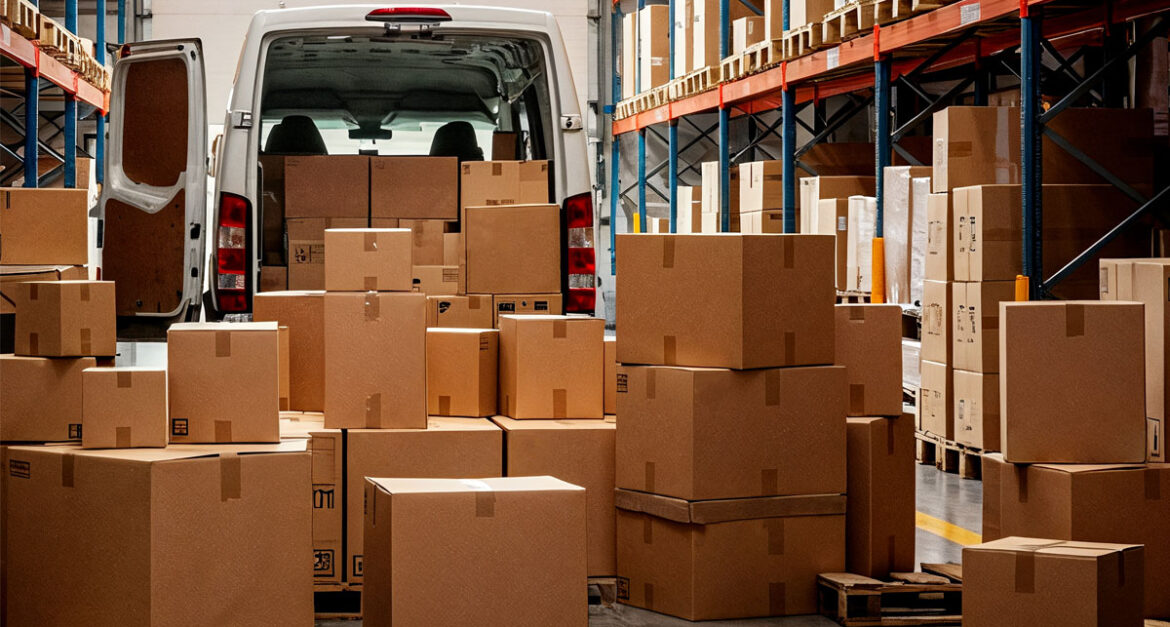
Why modern supply chains are moving away from single-use packaging
The supply chain is changing.
Costs are rising, sustainability expectations are increasing, and businesses are under pressure to reduce waste and manage logistics more efficiently.
One solution quietly creating major savings across industries is returnable packaging.
From foldable large containers (FLCs) to PP crates, pallets, totes, and customized reusable systems — returnable packaging is becoming the backbone of smarter, greener, and more predictable supply chains.
And if implemented correctly, it has a direct and measurable impact on cost, space, safety, and operational flow.
Let’s break down why.
1. What Exactly Is Returnable Packaging?
Returnable packaging refers to durable, reusable packaging systems designed to move products multiple times across the supply chain.
These include:
- foldable large containers (FLCs)
- polypropylene (PP) crates
- customized reusable trays and bins
- reusable pallets and pallet boxes
- collapsible and stackable storage systems
The goal is simple:
Move products safely while reducing waste, repeated packaging cost, and total logistics expense.
2. Why Single-Use Packaging Is Becoming Inefficient
Traditional one-time packaging — cardboard boxes, wooden crates, thermocol, bubble wrap — creates several hidden inefficiencies:
Repeat cost
You buy the same packaging material every time you ship.
High waste
Most of it ends up discarded after a single trip.
Limited stacking strength
This affects pallet numbers, trailer capacity, and warehouse utilisation.
Inconsistent safety
Transit damage is higher because the packaging loses strength quickly.
Poor compatibility with MHE
Most single-use packaging does not support forklifts or racking systems well.
In high-volume supply chains, these inefficiencies multiply rapidly.
3. The Advantages of Moving to Returnable Packaging
Returnable packaging optimises not just cost, but the entire operational flow.
Here’s how:
A. Lower Recurring Packaging Costs
Instead of continuously buying new packaging materials, durable packaging is reused for many cycles.
It reduces the overall cost per shipment and offers predictable budgeting.
B. Better Transport and Warehouse Utilisation
FLCs and reusable crates are designed for:
- higher stacking strength
- better volumetric utilisation
- optimized pallet arrangements
- consistent dimensions for racking and storage
This directly reduces freight cost and improves warehouse efficiency.
C. Improved Product Protection
Reusable crates and containers offer:
- stronger walls
- better load distribution
- improved shock and vibration resistance
This leads to fewer damages and more reliable deliveries.
D. Faster Handling and Operations
Standardised dimensions make operations faster and more predictable:
- quicker loading and unloading
- safer forklift handling
- reduced labour involvement
- simpler warehouse put-away and pick-up
Standardisation also reduces training time and operational errors.
E. Reduced Waste and Environmental Impact
Returnable packaging cuts down:
- cardboard and plastic waste
- disposal cost
- environmental footprint
This is increasingly important as companies align with ESG and sustainability goals.
4. When Returnable Packaging Makes Maximum Sense
Not every supply chain needs returnable packaging.
But for certain cases, it creates exceptional value.
It works best when:
- the shipping lanes are repetitive and predictable
- automotive, engineering, electronics, or industrial components are involved
- goods are high-value or damage-sensitive
- the supply chain has closed-loop cycles
- warehouses are standardized and use MHE
- stacking, density, or space utilisation matters
In these environments, the savings and operational improvements are substantial.
5. Why Many Companies Still Hesitate to Switch
Despite the benefits, companies often hesitate due to:
- perceived high initial investment
- lack of clarity on ROI
- uncertainty about reverse logistics
- difficulty in designing the right container
- resistance to operational change
These challenges are valid — but solvable with the right implementation plan.
6. How to Transition to Returnable Packaging the Right Way
A structured approach is essential.
The shift becomes easy when done in phases:
Step 1: Analyze current shipments
Identify lanes, volumes, and product sensitivity.
Step 2: Map existing packaging cost
Include waste, damage, labour, and storage cost.
Step 3: Design the right returnable container
Based on product, stacking, route, loading pattern, and MHE compatibility.
Step 4: Run a controlled pilot
Test the cycle — forward movement, return cycle, handling, space utilisation.
Step 5: Scale with a clear ROI model
Once the numbers are proven, scale across the network.
This ensures that the investment pays off quickly and consistently.
7. Why Paragon’s Returnable Packaging Solutions Stand Out
Paragon combines engineering, design, and operational experience to create custom returnable systems that actually work.
The strengths include:
Engineering-driven design
Every reusable container or crate is designed using CAD/CATIA tools for precision.
Understanding of warehouse and transport flow
Packaging is built to support stacking, racking, and MHE movement.
Customization for every product
Not one-size-fits-all — dimensions, dividers, and reinforcements are tailored.
Integration with clients’ existing supply chains
Solutions are designed to work with current processes, not disrupt them.
End-to-end support
From analysis to design, sampling, production, and logistics planning — everything is delivered as one system.
Final Takeaway: Returnable Packaging Is an Investment, Not an Expense
When used correctly, returnable packaging is one of the fastest ways to:
- cut logistics cost
- reduce damage
- improve warehouse flow
- boost sustainability
- standardize operations
For companies looking to improve efficiency in 2025 and beyond, this shift is no longer just a cost-saving measure — it’s a strategic advantage.
Want to explore returnable packaging for your supply chain?
Paragon can help evaluate your current packaging and build a custom ROI model for your operations.
- Talk to our Team
- Explore Returnable Packaging Solutions